Sew Hoppy: A Crafty Font for Colorful, Charming Designs
There's something undeniably joyful about a design that feels handmade—like it was stitched with care, buttoned with intention, and colored with a springtime palette. That’s exactly the personality packed into Sew Hoppy, a full-color SVG font that blends playful craft aesthetics with modern design versatility. If you’re tired of default typefaces that feel flat or generic, this font offers a refreshing way to inject warmth, texture, and whimsy into your projects.
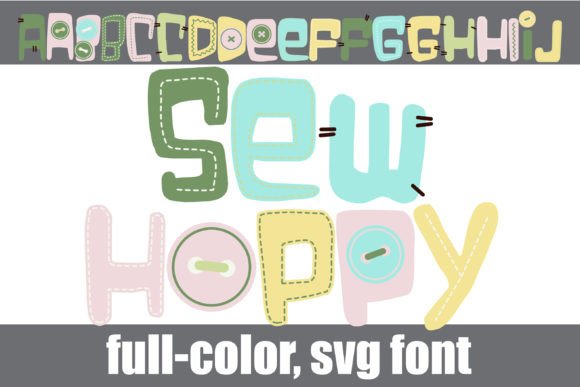
Unlike traditional fonts that rely on single-color strokes, Sew Hoppy uses OpenType color font technology to render letters that look like they’ve been embroidered or assembled with buttons and thread. Each character comes alive with details—stitched edges, subtle shadows, and a palette that feels fresh and inviting. And because it’s a vector-based SVG font, you can scale it up for posters or down for social icons without losing a pixel of quality.
Where Craft Meets Creativity: Practical Uses for Sew Hoppy
This isn’t just a novelty font. Sew Hoppy shines in real-world applications where personality and visual impact matter. Think beyond the obvious—yes, it’s great for craft blogs and handmade shop logos, but its utility extends far further.
Branding and Logo Design: For businesses with a friendly, approachable, or artisan brand identity, Sew Hoppy can set the tone instantly. Imagine a bakery logo, a children’s boutique, or a DIY craft subscription box—this font communicates hands-on quality and creativity without saying a word.
Packaging and Labels: On product packaging, especially for items like jams, candles, stationery, or gift sets, the stitched texture adds a tactile feel that resonates with customers looking for authenticity. It helps products stand out on shelves or in online marketplaces where visual distinctiveness is key.
Social Media and Digital Content: In a crowded feed, Sew Hoppy stops the scroll. Use it for Instagram quotes, YouTube thumbnails, Pinterest graphics, or Facebook event headers. Its colorful, detailed nature catches the eye and reinforces a consistent brand vibe across platforms.
Print Materials and Merchandise: From invitation cards and thank-you notes to posters and tote bag designs, this font adds a layer of charm. It’s particularly effective for seasonal promotions—think Easter, spring sales, or craft fair marketing—where a festive, handmade look is desirable.
Editorial and Web Design: While display fonts like this are best used sparingly in body text, they work beautifully for article headlines, pull quotes, or section headers in blogs, magazines, and websites. Pair it with a clean sans-serif font for contrast, and you’ll achieve balance between playfulness and readability.
Working with a Full-Color SVG Font: What You Need to Know
Sew Hoppy is an OpenType full-color (SVG) font, which means it’s installed just like any standard .otf file—on a Mac, you’d use FontBook; on Windows, your preferred font manager or Control Panel. However, there’s one crucial detail: color fonts will appear as black in programs that don’t support them. Even in compatible software, they might show as black in the font preview window—you’ll only see the colors once you type and render them on your canvas.
Programs that currently support full-color SVG fonts include Adobe Illustrator, Photoshop, InDesign, Silhouette Studio, QuarkXPress, and Inkscape. Always test the font in your intended software before committing to a design. If you’re working in a program that only shows black, you can still use the font—but you’ll miss out on its vibrant, multi-colored personality.
Another feature worth exploring is the alternate glyph set. Sew Hoppy includes variations of each letter accessible through your system’s character map or Silhouette’s glyph panel. This allows for even more customization—mix and match letter styles to avoid repetition and add organic, handmade flair to your typography.
Pairing and Professional Presentation
A font like Sew Hoppy is a statement piece. To use it effectively, consider pairing it with simpler, more neutral typefaces. A clean sans-serif like Montserrat or Lato can balance its whimsy, while a subtle serif like Merriweather can add elegance. The goal is contrast—let Sew Hoppy be the star in headlines or logos, and let supporting fonts handle longer text.
When choosing font styles for a project, always align typography with your goals. Is your brand modern and playful? Sew Hoppy might work as a primary display font. Are you designing a wedding invitation? It could serve as an accent font for names or monograms. Test different pairings and layouts to see what feels cohesive—not just visually, but emotionally.
Readability is key, especially in smaller sizes or dense layouts. Because Sew Hoppy is detailed and textured, it’s best used at larger sizes where its craftsmanship can be appreciated. For body text, always opt for simpler fonts that prioritize legibility.
Licensing and Commercial Use
Before using Sew Hoppy in commercial projects, review the font’s licensing terms. Most premium fonts come with specific allowances for personal versus commercial use—some may require an extended license for merchandise or large-scale distribution. Understanding these details upfront protects your business and ensures you’re using design assets ethically.
If you’re a small business owner or entrepreneur investing in brand identity, a commercial font license is often a worthwhile expense. It gives you legal clarity and professional credibility, especially when your designs are customer-facing.
Final Thoughts on Choosing a Creative Font
Typography is one of the most powerful tools in visual communication. The right font doesn’t just convey words—it conveys feeling, quality, and intention. Sew Hoppy is more than a decorative typeface; it’s a design asset that can help build recognition, engage audiences, and elevate projects with its unique, craft-inspired character.
Whether you’re designing a logo for a new startup, creating social media graphics for a blog, or packaging a handmade product, this font offers a distinctive voice. Just remember to use it thoughtfully—pair it wisely, test it in your software, and let its colorful, stitched details do what they do best: make your designs feel genuinely special.